Behind the scenes
How a poem quietly becomes a painting
A two-player poetry game: you only ever see your partner's last line, and while the poem grows in the dark, an AI paints what neither of you can. Here's how the painting is made, who it paints, and the models swapped underneath it.
The mechanic
From two lines to a painting
Two players take turns, one line at a time, each seeing only the line their partner just wrote. It's the old surrealist game, Exquisite Corpse, played over WhatsApp. The quiet part is the painting: a separate AI reads along and pictures the whole poem.
- Every line, hidden and visible, goes into one prompt. The painting sees the whole poem even when the players can't see each other's lines.
- The poem is handed over just as it was written. No framing, no imposed style. The words decide the picture.
- To avoid flicker, it re-renders only every six lines, plus a final bake when the poem ends. One fixed visual identity keeps the same world and the same faces across every refresh.
- The finished image is what you share, painted once and kept exactly as it was. A poem's painting never changes underneath the people who made it.
All of it runs in one small, quiet place. One helper, reading and painting.
It moves
Then it moves, and goes live
A finished poem doesn't have to sit still. Its painting can go to an image-to-video model that sets one thing breathing, a flower opening, light shifting, dust drifting, while the rest holds. The five-second clip loops slowly, so an animated poem greets you as a quiet hero video instead of a flat image.
The page is alive too. While a poem is in play it updates in real time, so a new line or a fresh painting just appears, no refresh. WhatsApp carries the turns; the page carries the moment.
Next is writing together in real time: a live co-writing mode with video and chat, top of the roadmap right now. Vote it up or propose your own on the build board.
Diversity by design
Who the painting paints
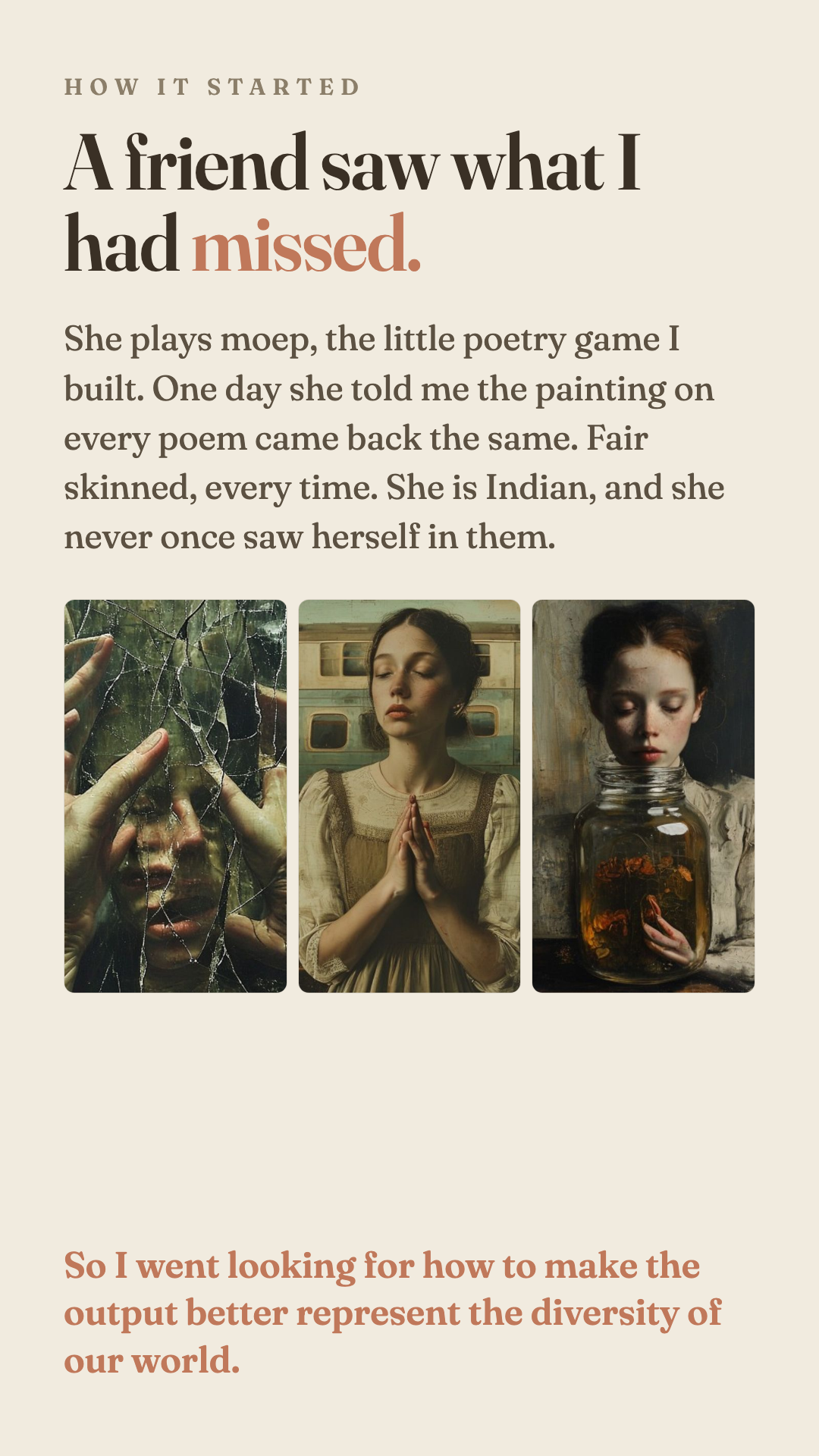
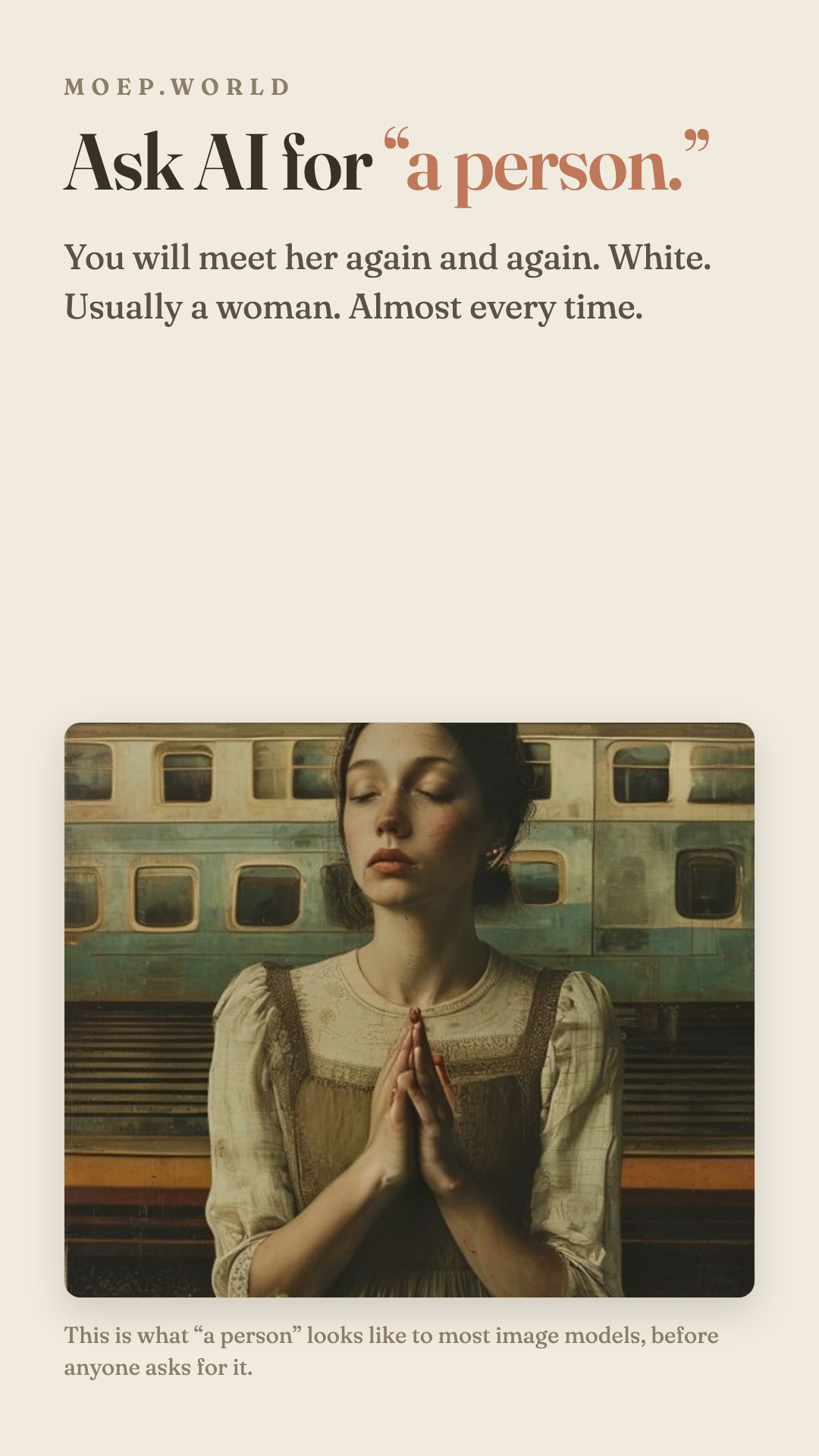
A friend who plays moep noticed something I had missed. She's Indian, and every one of her poems painted the same person: fair skinned, almost always a woman. She never saw herself. That's not her poems, it's the model's default for the word person.
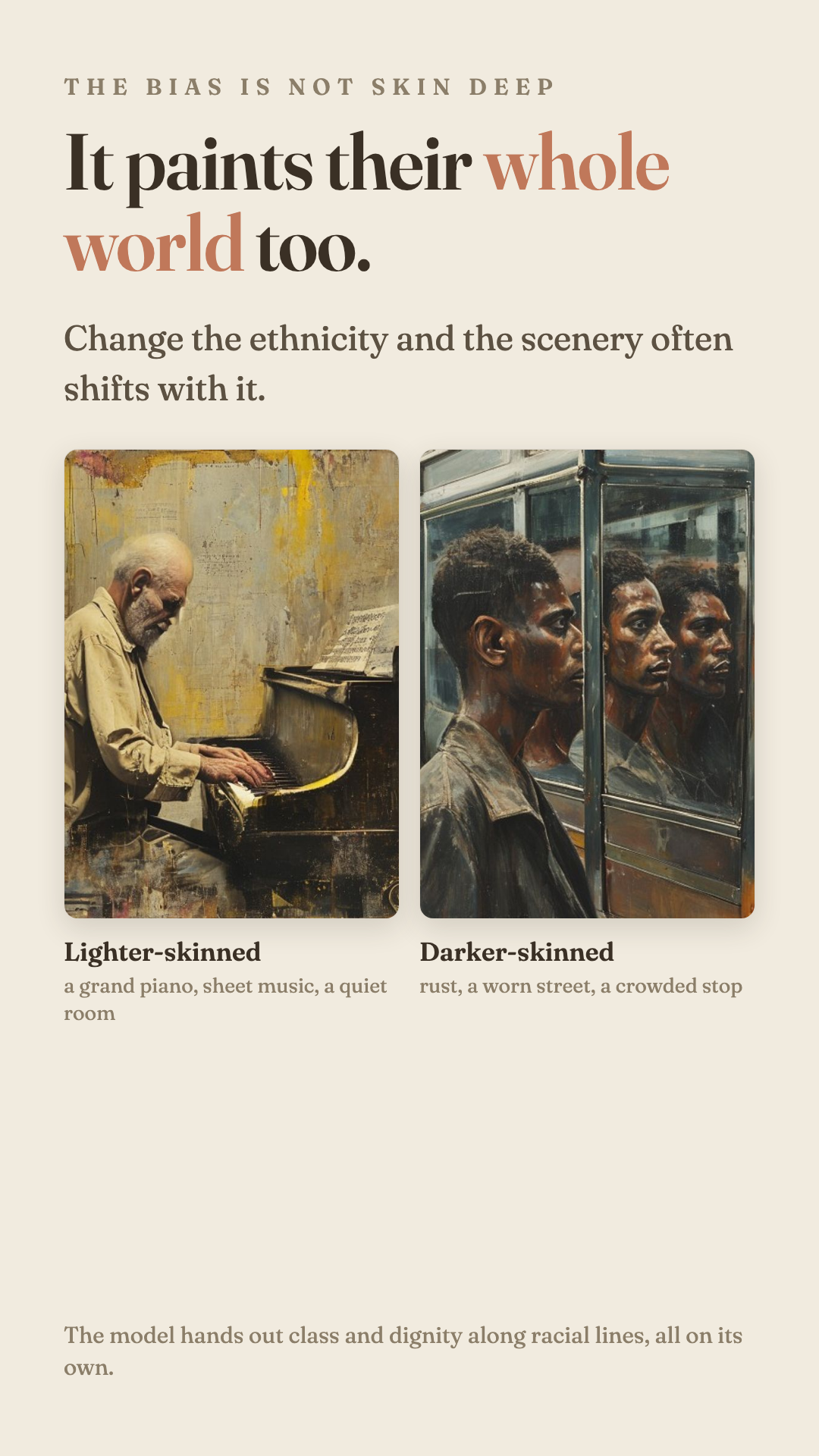
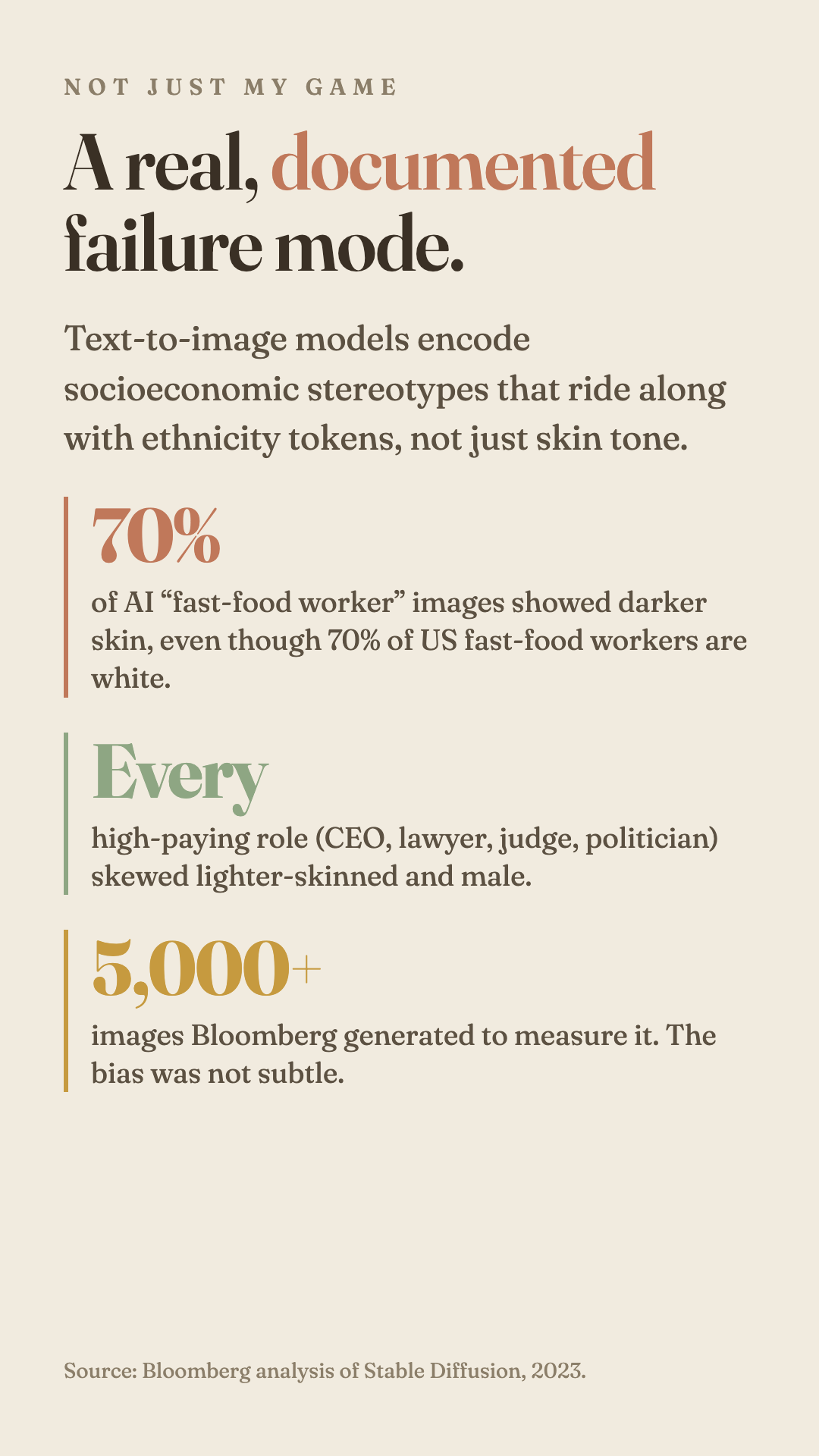
It's a documented failure mode, not a hunch. When Bloomberg generated over five thousand images to measure it, darker skin clustered into low-paid work and lighter skin into every high-status role. And it's not skin deep: change the ethnicity and the model changes the whole scene around the figure, handing some a grand piano and others a worn street.
So the fix can't be a single word. The model's silence isn't neutral, and the only way past it is to name who you mean, on purpose, every time. Here's the whole story as we tell it on Instagram. Tap any panel to read it full size.
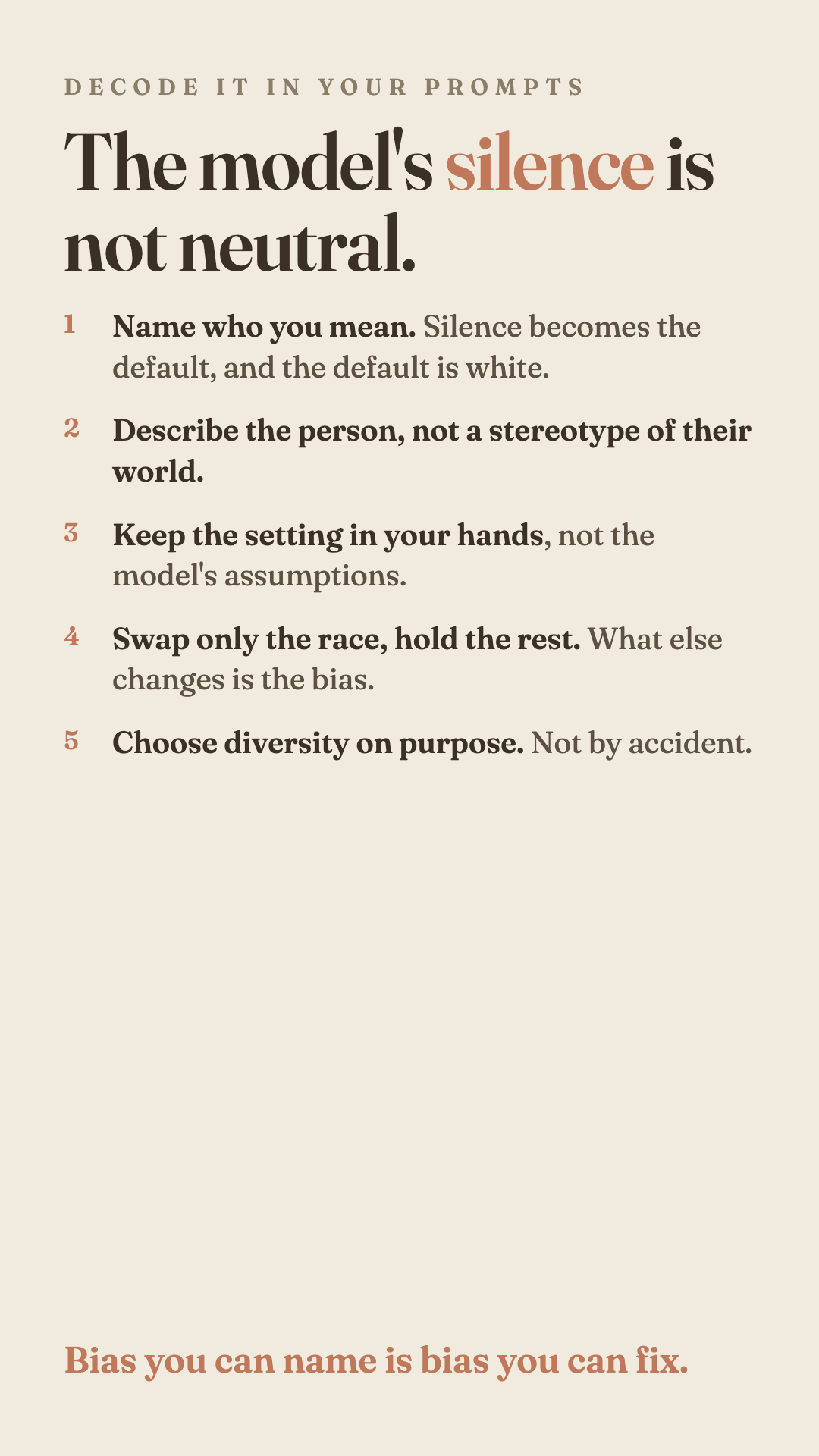
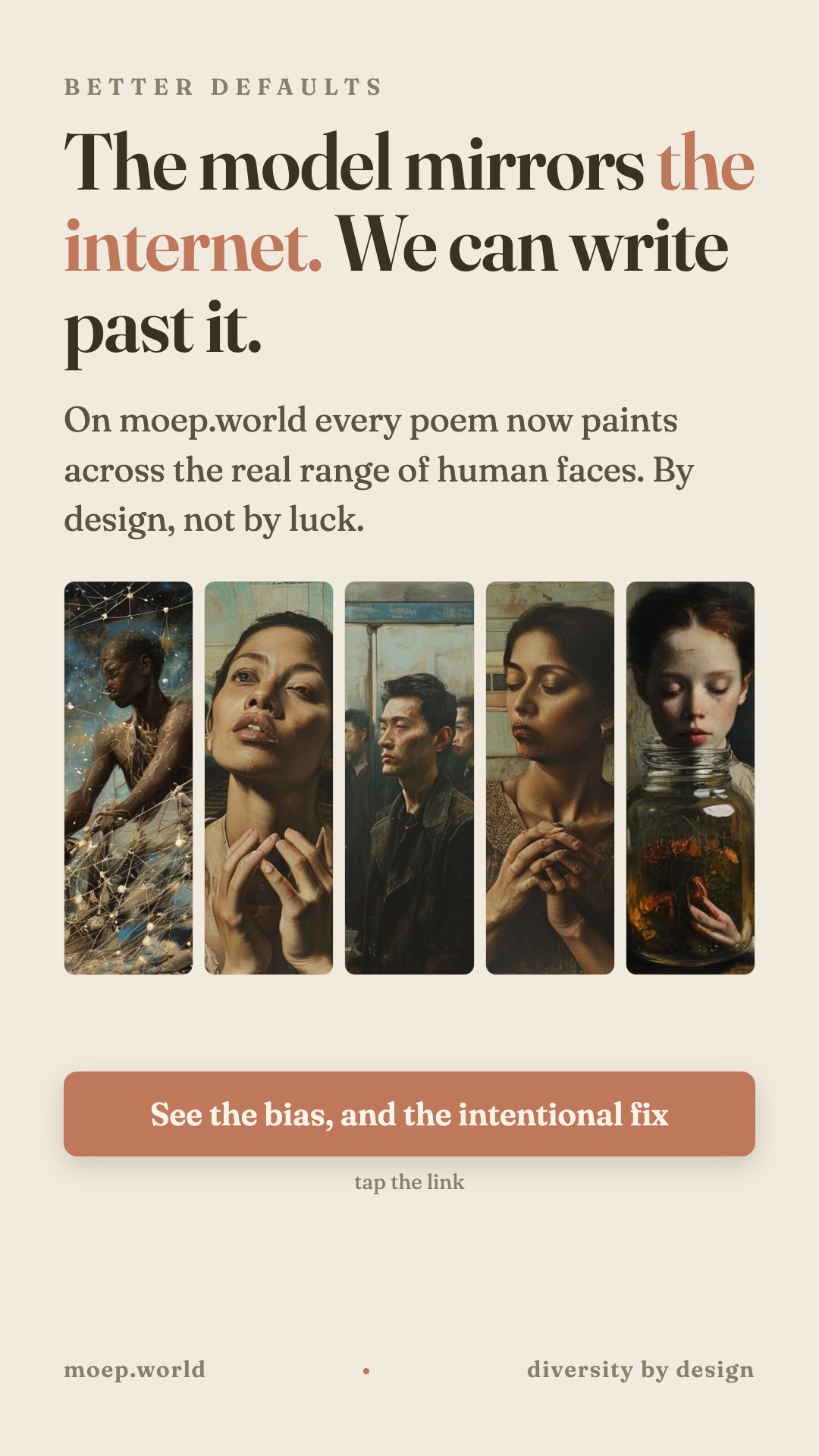
Now every poem draws one heritage from a pool of twelve, spread evenly across the world's regions, with Europe a deliberate minority of two. It binds only when the poem conjures a person, so an abstract poem about rain or clocks stays untouched. And because it names regional features, not just a skin tone, the faces read as distinctly themselves instead of drifting back to a European look.
Bias you can name is bias you can fix. The model mirrors the internet. We can write past it.
The proof
The fix, in one poem
This is the same poem, the same fixed seed, rendered once for every heritage in the pool. Only the descriptor changes. Watch what stays still.
"A figure looks back over one shoulder, at the door they did not close."
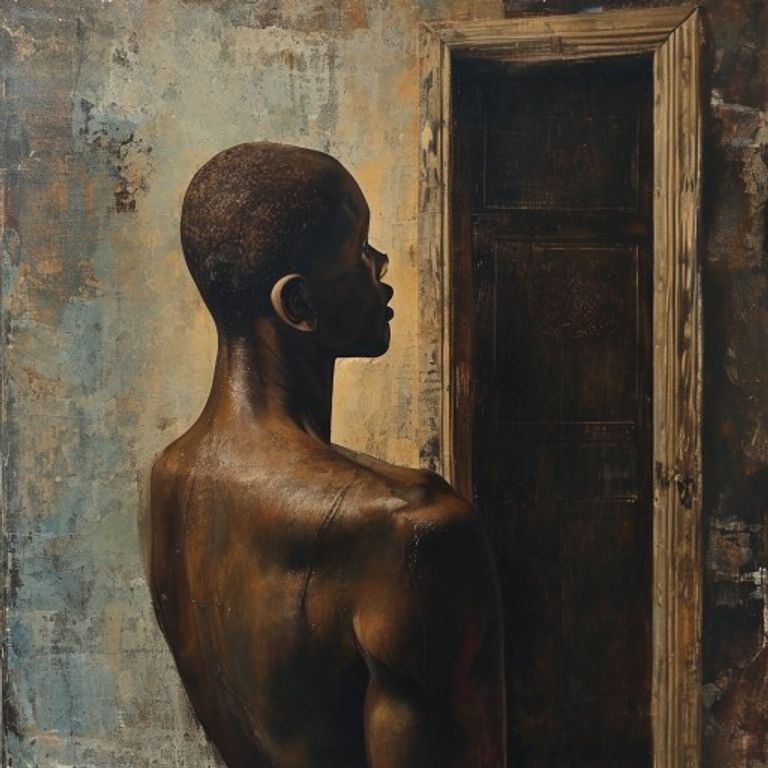
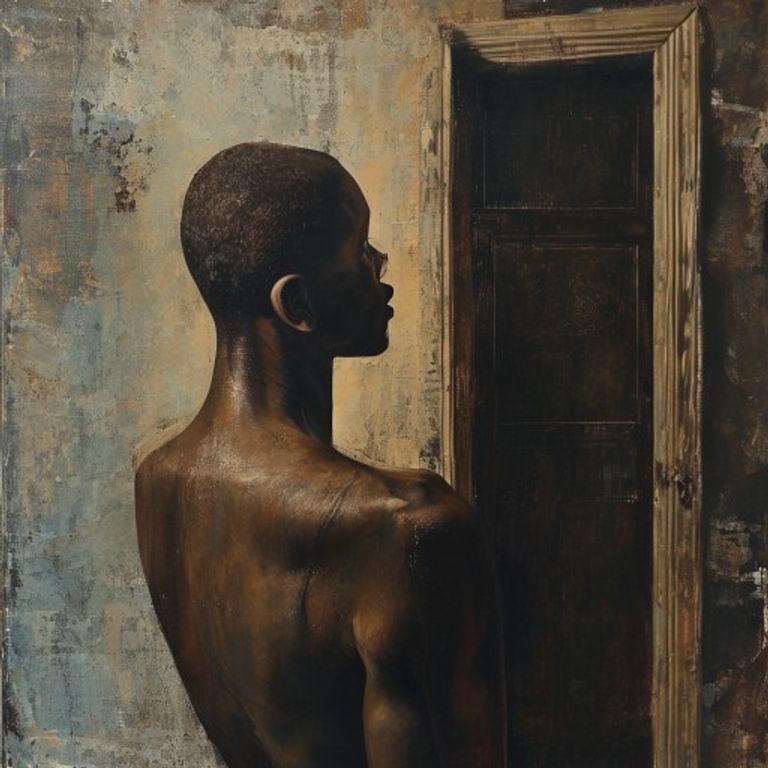
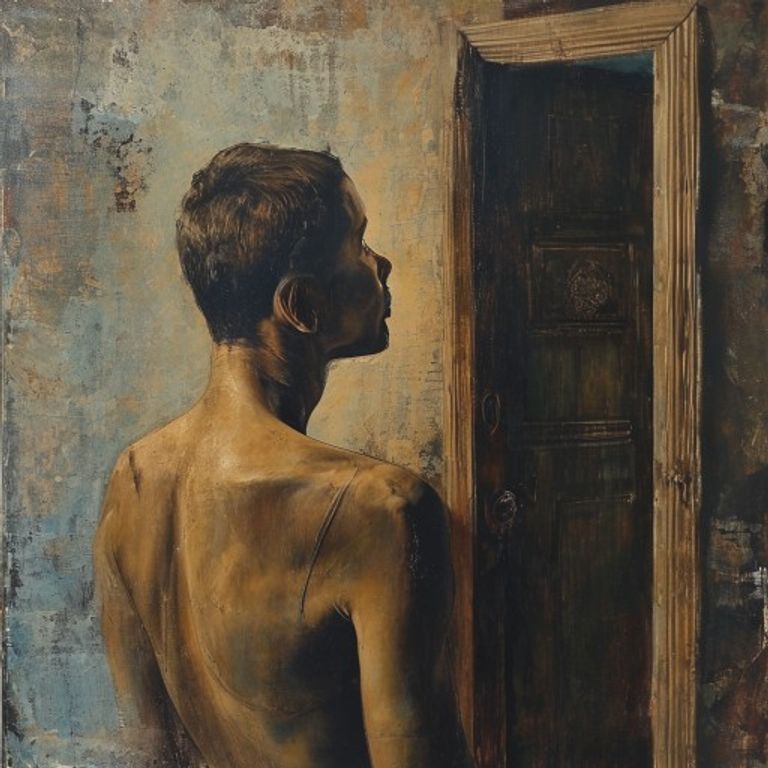
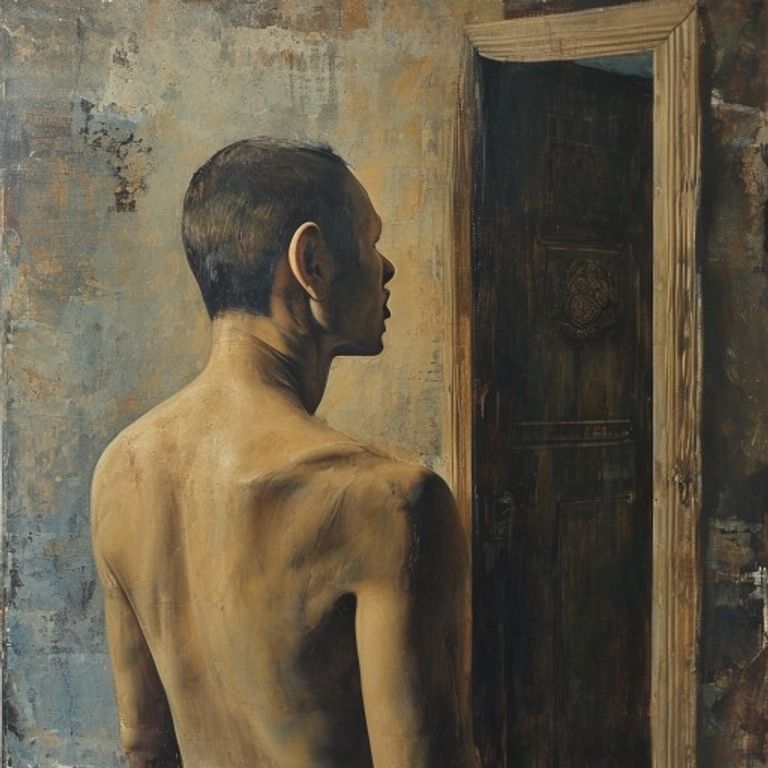
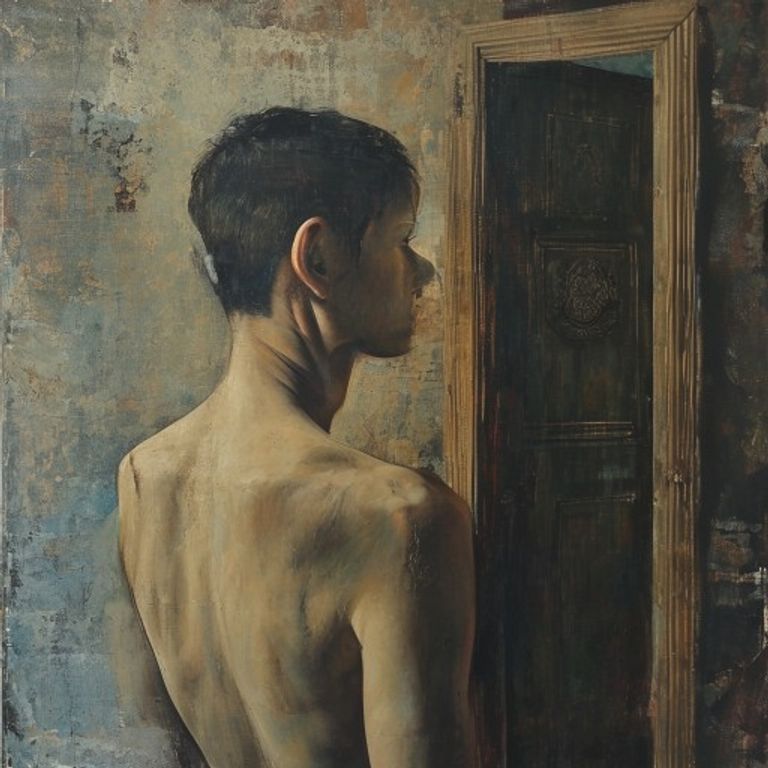
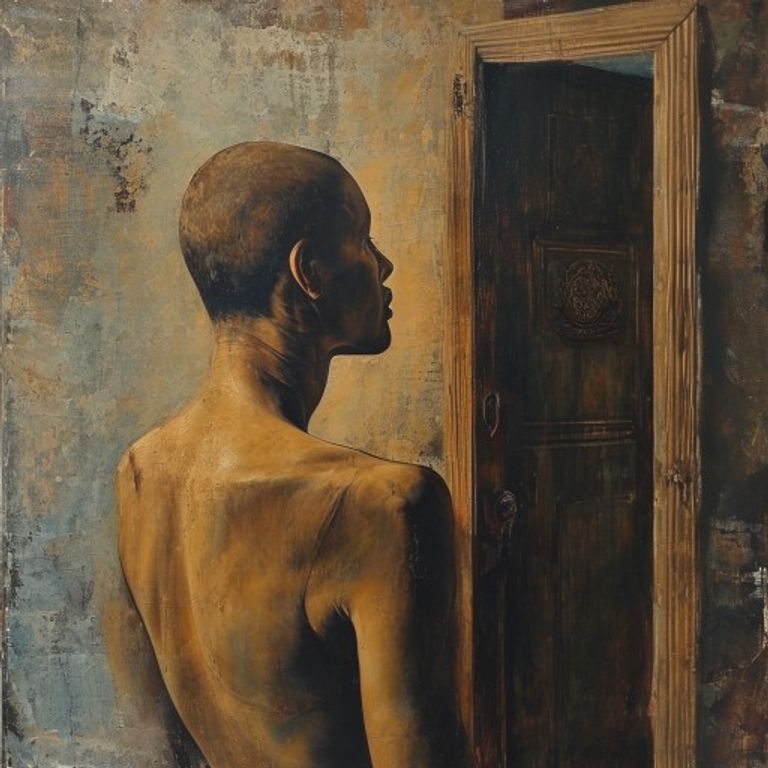
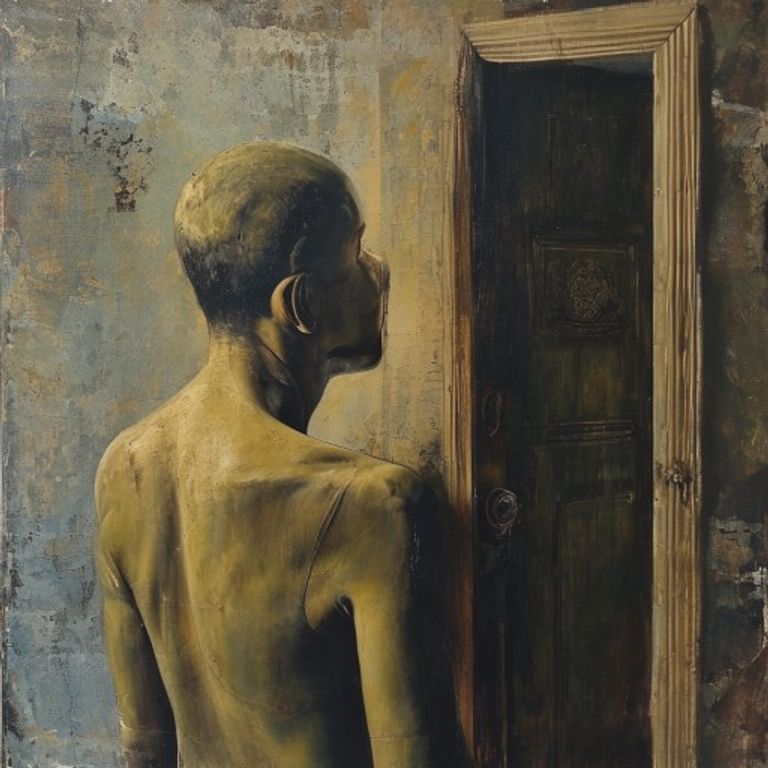
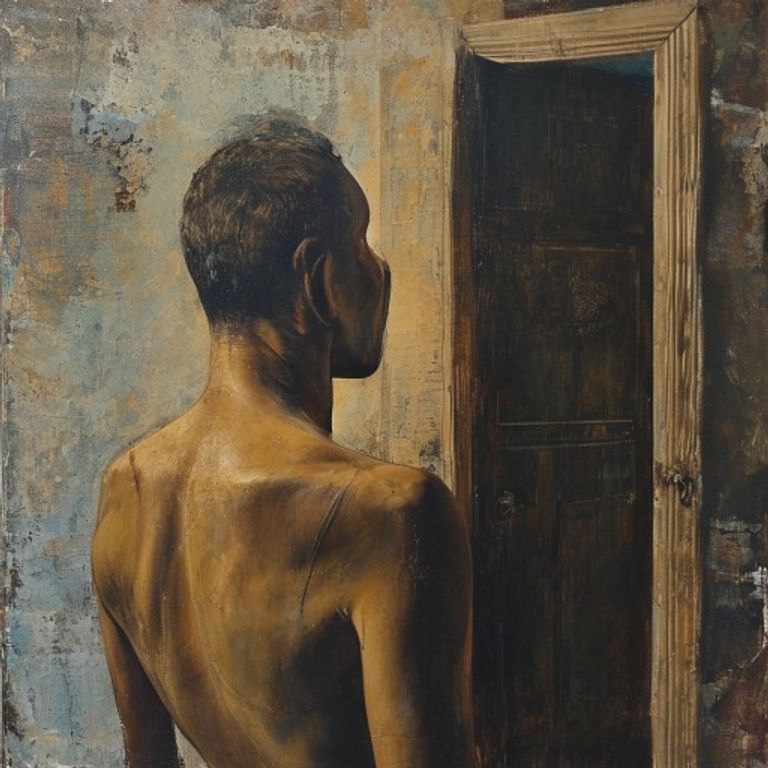
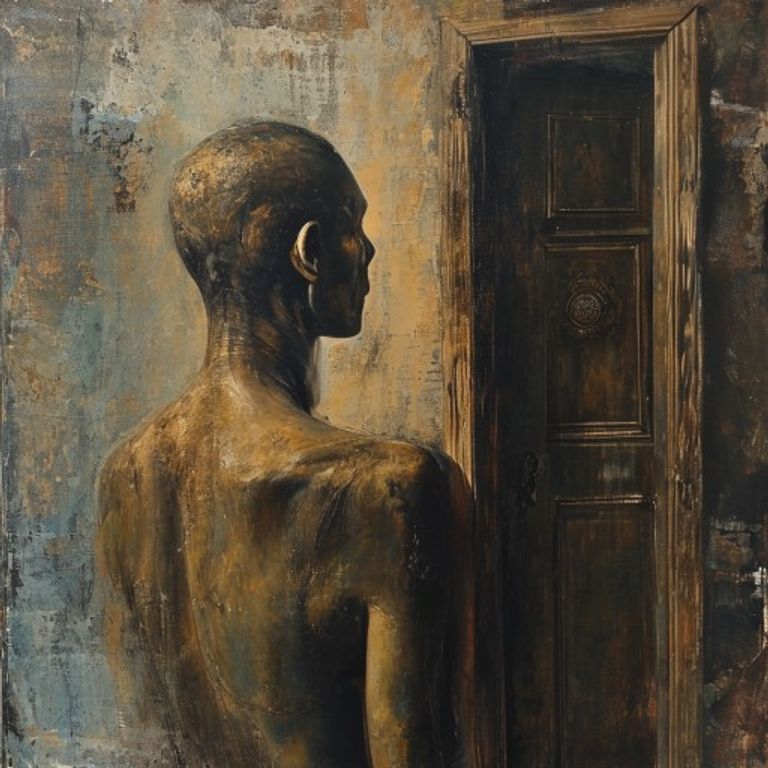
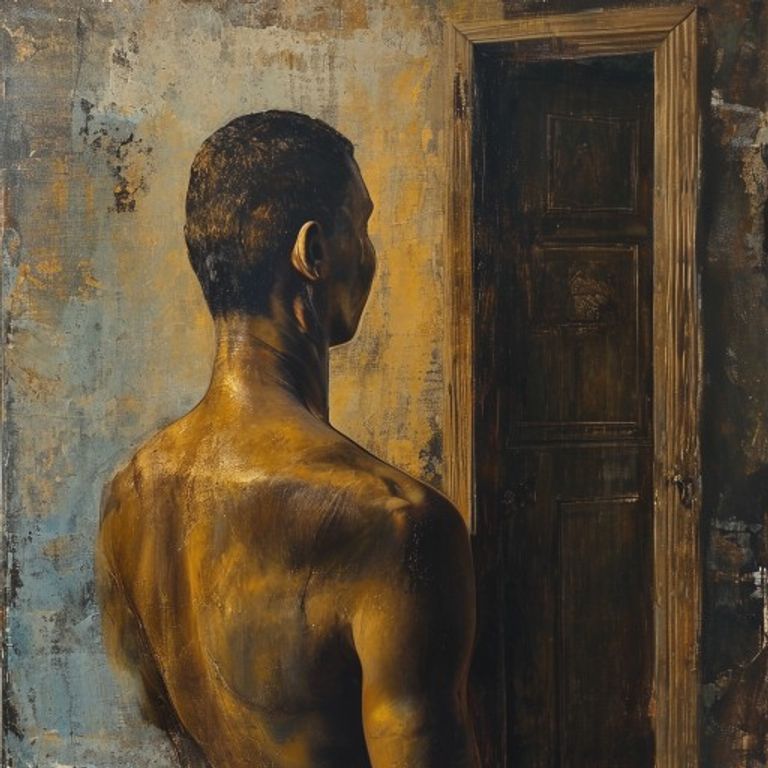
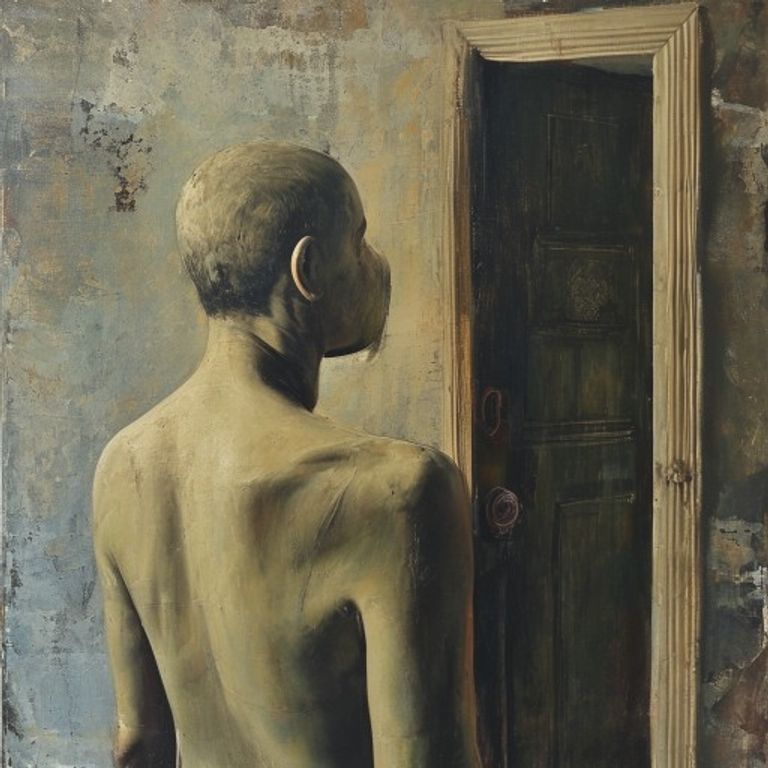
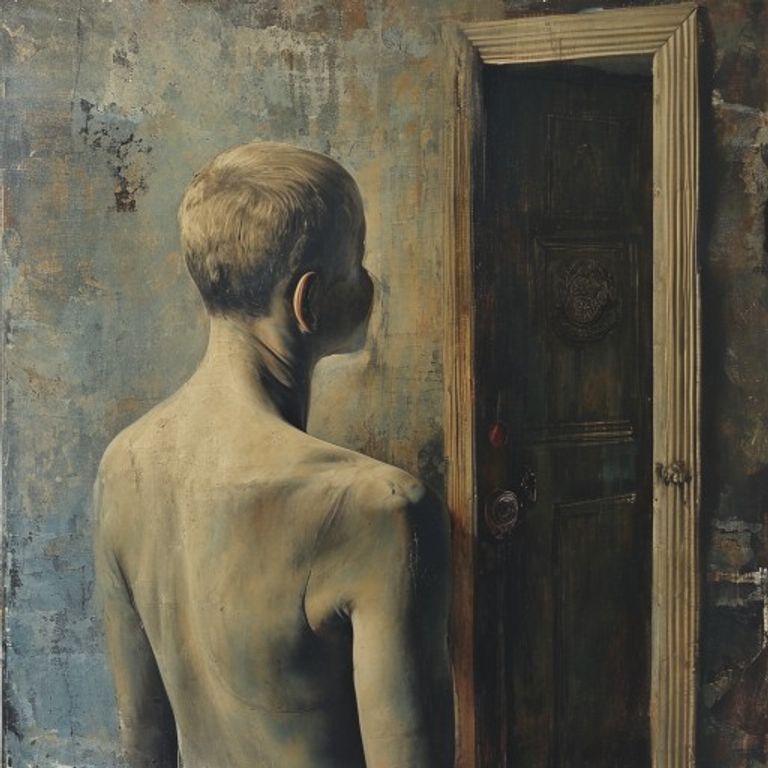
The wall, the door, and the light never move. Because the descriptor touches only the person, the prompt no longer ties someone's world to their face. Who appears varies without anyone being handed a poorer or a richer life. That's the point: diversity chosen on purpose, not left to the default.
See the full gallery of samples, with dedicated sections for the range of faces across many different poems.
Changing the painter
We have swapped the painter underneath the game
The brush has changed hands a few times, not always by choice. Each swap was its own small fire to put out while the poems kept being written.
-
In the beginning
Every original painting was made by a model called Sana, through a free, anonymous service. It set the look of the whole game.
-
The free door closed
The free service went behind a paywall almost overnight. Any poem not already painted came back blank.
Pain point: finished poems looked fine, their paintings already saved, but anything new went blank. The game looked half broken to newcomers.
-
The original went missing
On the paid service, the original Sana had been removed from the menu entirely. The old look couldn't be reproduced exactly.
Pain point: the nearest substitute, Flux, painted competently but off-brand. It didn't feel like moep.
-
Where it is now
moep paints with NVIDIA's Sana again, through a pay-per-image provider that actually offers it. The original look is back, the diversity work rides on top, and a poem repaints only every six lines so the cost stays small.
Lesson kept: if a painting ever fails, the last good one stays in place. A poem never blanks out on someone again.
By the numbers
What people have made
Small and personal, these are the live counts from the game right now. No growth charts, just what two-at-a-time poetry adds up to.
read and played in 16 countries so far
Every finished poem lives in the public gallery, painting and all. Names and numbers never appear there.
The little exhibits
Pages we built along the way
Some of this work earned its own page. Each is a small exhibit you can wander through.
Now go make one
Two players, two lines each, one painting neither of you saw coming.
Start a poemYou write the words. The painting is on us.
moep.world • Read the history • Contact: me@subagent.marketing • Instagram